


Newsletters
Overview of the French Offshore Wind Tender Regime
Kiyoshi Honda, Misaki Aono, Brice Bohuon (Darrois Villey Maillot Brochier) (Co-author)
- Infrastructure/Energy/Environment
- Power Generation/Renewable Energy
Publication

Newsletters
*Please note that this newsletter is for informational purposes only and does not constitute legal advice. In addition, it is based on information as of its date of publication and does not reflect information after such date. In particular, please also note that preliminary reports in this newsletter may differ from current interpretations and practice depending on the nature of the report.
As Thailand’s data center sector expands, the associated regulatory framework continues to evolve to manage the sector’s resource-intensive demands. Three recent developments are of note:
In this newsletter, we outline these three developments and their immediate implications for pending and upcoming investment promotion applications.
Formerly, under the system that had been introduced on March 30, 2026, developers applying for BOI investment promotion were required to independently secure confirmation of electricity availability from the Office of the Energy Regulatory Commission (“ERC”) before submitting their application. Effective July 15, 2026, however, the BOI replaced this single-agency check with a holistic review conducted by a newly established subcommittee, in order to address infrastructural impacts extending beyond grid capacity alone.
On July 15, 2026, the BOI approved the expansion and restructuring of its existing energy panel into the Subcommittee on Energy Management for Investment Facilitation and Data Center Project Screening (the “Subcommittee”).
Chaired by the Minister of Energy, with the BOI and the Energy Policy and Planning Office (“EPPO”) serving as joint secretariat, the Subcommittee now acts as the gateway for the mandatory preliminary assessment of all data center projects. The Subcommittee must approve a project before investors can formally submit an investment promotion application to the BOI. This requirement applies both to new applications for data center projects seeking BOI promotion and projects whose BOI promotion applications are currently under consideration.
The Subcommittee draws its members from a wide range of government offices and state utilities, including the ERC; the Department of Climate Change and Environment; the Department of Water Resources; the Electricity Generating Authority of Thailand; the Provincial Electricity Authority; the Provincial Waterworks Authority; and the Office of the National Higher Education, Science, Research and Innovation Policy Council.
As of this newsletter, there has been no publication, for the Subcommittee’s review, of detailed application procedures, required documentation, assessment criteria, and indicative timelines. Investors should therefore factor the resulting uncertainty into their project planning and timelines.
On August 5, 2026, the Cabinet approved a draft Prime Minister’s Office Regulation on the Data Center Business Policy Committee (the “Policy Committee”), which was published in the Royal Gazette on August 13, 2026, and took effect the following day.
The regulation establishes a national-level policy body dedicated to the data center sector. This move addresses the exceptional power and water demands of data centers, whose rapid growth already strains grid stability, national energy security, and electricity pricing, while they compete for limited water resources with households as well as the agricultural and industrial sectors. To manage these challenges, the newly formed Policy Committee is chaired by a Deputy Prime Minister, with the Ministers of Digital Economy and Society, Interior, and Energy serving as Vice Chairs. The Policy Committee is further supported by 13 ex-officio members—comprising the permanent secretaries of eight ministries; the Secretaries-General of the BOI, the ERC, the National Broadcasting and Telecommunications Commission (NBTC); the Office of National Water Resources; and the Director of EPPO—along with up to three additional members appointed by the Prime Minister.
The Policy Committee is empowered to propose comprehensive policies, standards, and operational frameworks to the Cabinet, which will guide state agencies in approving, licensing, or servicing data center operators. Furthermore, the Policy Committee is tasked with studying and monitoring the sector’s broader socio-economic and environmental impacts, reporting its findings directly to the Cabinet and performing any other regulatory duties assigned by the Cabinet or the Prime Minister. To efficiently manage its workload, the Policy Committee may appoint specialized subcommittees to handle specific issues or delegated tasks.
Proposals by the Policy Committee must weigh not just economic benefit, but also clean energy use, energy security and pricing, equitable water allocation, urban planning, fire safety, data sovereignty, environmental protection, and Thailand’s carbon-neutrality target. Once a proposal is adopted by the Cabinet, implementing agencies must report progress to the Policy Committee quarterly.
The Policy Committee, during the meeting on September 4, 2026, reviewed data from 16 agencies regarding data center project approvals and investments. The data revealed that 35 projects are already operational (including 11 under BOI supervision). Additionally, there are 166 projects currently in the pipeline: approximately 49 under construction and over 117 pending approval or consideration by various agencies.
The Policy Committee resolved to temporarily suspend all ongoing construction and pending approvals for data center projects due to a lack of sufficient detail to properly monitor and regulate these developments. This pause will remain in effect until clear minimum standards for environmental and social care are established, alongside economic criteria designed to ensure the country receives maximum benefits. The agencies assigned to draft these criteria have been given a strict one-month deadline to complete them.
Furthermore, four specialized subcommittees were formed to define minimum requirements for new builds and to oversee post-auditing processes:
The recent regulatory shift transitions the sector from a centralized, single-agency review to a more rigorous and multi-tiered framework. Moving forward, the overarching National Policy Committee will establish macro-level mandates for the sector, while a dedicated BOI Subcommittee will scrutinize individual project applications.
Although in the near term this transition introduces a more intensive pre-approval phase, it promises greater regulatory certainty and transparency once the new baseline criteria are standardized.
To successfully navigate this evolving landscape, developers, investors, and operators should consider the following:
We will continue to monitor both the Subcommittee’s screening process and the Policy Committee’s rollout, along with any supplementary guidance from the BOI, the Ministry of Energy, or the Cabinet.
Should you have any questions regarding how these regulatory changes may impact your current project development plans or cross-border investment strategies in Thailand, please contact Supasit Boonsanong at supasit.b@nagashima.com and Kobchai Nitungkorn at kobchai.n@nagashima.com.
This newsletter is given as general information for reference purposes only and therefore does not constitute our firm’s legal advice. Any opinion stated in this newsletter is a personal view of the author(s) and not our firm’s official view. Given the nature of this newsletter as general information, statutory provisions and source citations may have been intentionally omitted. For any specific matter or legal issue, please do not rely on this newsletter but make sure to consult a legal adviser. We would be delighted to answer your questions, if any.
Newsletters
Kiyoshi Honda, Misaki Aono, Brice Bohuon (Darrois Villey Maillot Brochier) (Co-author)
Newsletters
Supasit Boonsanong, Kobchai Nitungkorn (Co-author)
Newsletters
Supasit Boonsanong, Kobchai Nitungkorn (Co-author)
Newsletters
Shunsuke Minowa, Ponpun Krataykhwan (Co-author)
Newsletters
Supasit Boonsanong, Kobchai Nitungkorn (Co-author)
Newsletters
Shunsuke Minowa, Ponpun Krataykhwan (Co-author)

Newsletters
Yoshihisa Watanabe, Hiroki Kawaguchi, Teruaki Arai (Co-author)

Newsletters
Supasit Boonsanong, Phareeya Yongpanich (Co-author)
Newsletters
Kiyoshi Honda, Misaki Aono, Brice Bohuon (Darrois Villey Maillot Brochier) (Co-author)
Newsletters
Supasit Boonsanong, Kobchai Nitungkorn (Co-author)
Newsletters
Supasit Boonsanong, Kobchai Nitungkorn (Co-author)
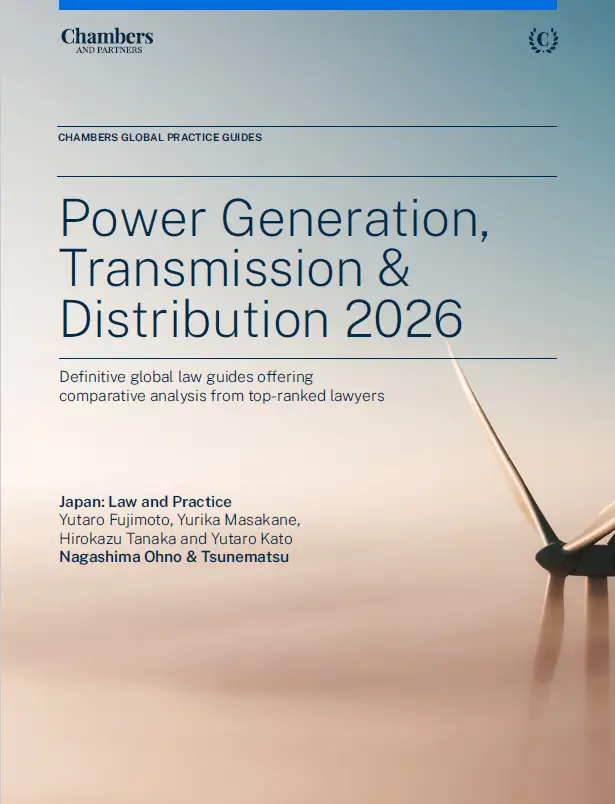
Articles
(July 2026)
Yutaro Fujimoto, Yurika Masakane, Hirokazu Tanaka, Yutaro Kato (Co-author)
Newsletters
Mara Recto
Newsletters
Supasit Boonsanong, Kobchai Nitungkorn (Co-author)
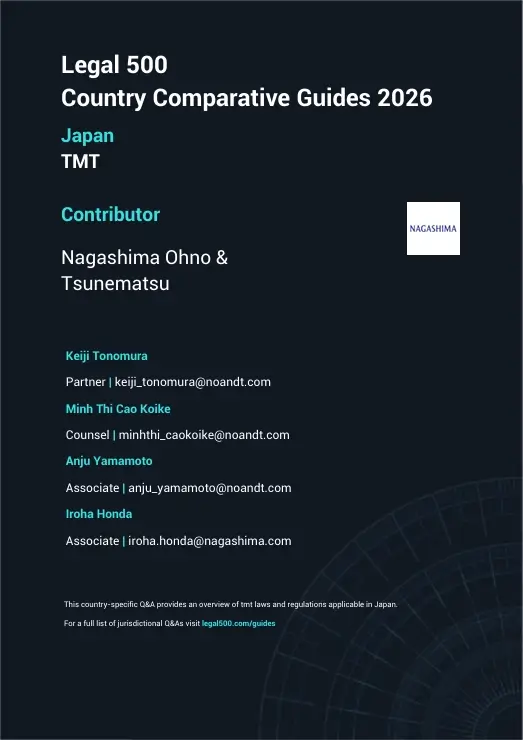
Articles
(August 2026)
Keiji Tonomura, Minh Thi Cao Koike, Anju Yamamoto, Iroha Honda (Co-author)
Newsletters
Kenji Tosaki, Hideyuki Otsuki, Jun Ihara, Yumi Tominaga (Co-author)
Newsletters
Mara Recto
Newsletters
Supasit Boonsanong, Kobchai Nitungkorn (Co-author)
Articles
(August 2026)
Keiji Tonomura, Minh Thi Cao Koike, Anju Yamamoto, Iroha Honda (Co-author)
Newsletters
Kobchai Nitungkorn
Newsletters
Yothin Intaraprasong, Phareeya Yongpanich, Punvaris Udomratana (Co-author)
Newsletters
Kiyoshi Honda, Misaki Aono, Brice Bohuon (Darrois Villey Maillot Brochier) (Co-author)
Newsletters
Yothin Intaraprasong, Pundaree Tanapathong, Niparat Pothong (Co-author)
Newsletters
Mara Recto
Newsletters
Yothin Intaraprasong, Phareeya Yongpanich, Punvaris Udomratana (Co-author)
Newsletters
Yothin Intaraprasong, Pundaree Tanapathong, Niparat Pothong (Co-author)
Newsletters
Mara Recto
Newsletters
Supasit Boonsanong, Kobchai Nitungkorn (Co-author)
Newsletters
Yothin Intaraprasong, Phareeya Yongpanich, Punvaris Udomratana (Co-author)
Newsletters
Yothin Intaraprasong, Pundaree Tanapathong, Niparat Pothong (Co-author)
Newsletters
Supasit Boonsanong, Kobchai Nitungkorn (Co-author)
Newsletters
Supasit Boonsanong, Kobchai Nitungkorn (Co-author)