
Articles
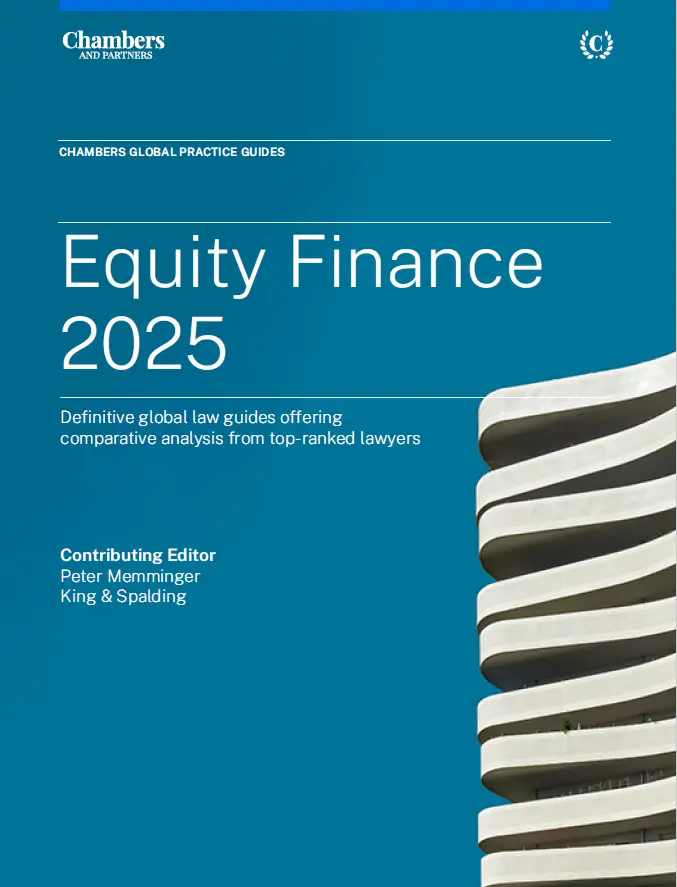
Chambers Global Practice Guides Equity Finance 2025 Japan – Law & Practice
(October 2025)
Sosuke Kimura, Miho Susuki (Co-author)
- Finance
- Capital Markets
- Financial Regulations
Publication

Newsletters
*Please note that this newsletter is for informational purposes only and does not constitute legal advice. In addition, it is based on information as of its date of publication and does not reflect information after such date. In particular, please also note that preliminary reports in this newsletter may differ from current interpretations and practice depending on the nature of the report.
On 15 July 2025, the Cabinet approved the draft Financial Business Hub Act (the “Bill”), as proposed by the Ministry of Finance, following final review by the Office of the Council of State. This Bill builds upon the preliminary principles approved by the Cabinet on 4 February 2025, incorporating a few amendments in response to feedback from relevant authorities, including the Bank of Thailand, the Stock Exchange of Thailand, and the Office of Civil Service Commission.
The primary objective of the Bill is to promote Thailand as a financial center by facilitating the operations of Targeted Financial Business Operators (as defined below) through a new licensing regime and regulatory exemptions. Further details on these are set out in Sections (ii) and (iii) below.
Under the Bill, the Office of the Committee for the Supervision and Promotion of Financial Business Hub (“Committee”) will be established as a one-stop government authority. Chaired by the Minister of Finance, the Committee will serve as the key regulatory body responsible for licensing, determining operational areas for Targeted Financial Business Operators, and coordinating with other relevant authorities in order to achieve the objectives of the Bill.
The Bill governs business operations in the following sectors, collectively referred to as “Targeted Financial Businesses”:
As a general rule, prior approval from the Committee is required for applicants to qualify as “Targeted Financial Business Operators”. In addition, these operators must comply with certain criteria and limitations, which should be carefully observed, including:
The Bill provides a range of incentives for Targeted Financial Business Operators, the details of which will be further prescribed by the Committee. These include:
The draft Bill is currently awaiting inclusion on the House of Representatives’ agenda for consideration and will proceed through further legislative stages in the Senate before implementation.
This Bill represents a strategic legislative initiative aimed at enhancing Thailand’s competitiveness in the global financial sector. By leveraging its competitive advantages, such as low living costs, a skilled workforce, and robust financial infrastructure, Thailand aims to attract foreign investment and highly qualified professionals, fostering the growth of both financial institutions and ancillary industries. The anticipated outcomes include increased employment, technology and knowledge transfer, and the development of a sophisticated financial ecosystem.
We will continue to monitor the development of the Bill and keep you posted on any significant updates.
*1
Section 57 of the Bill
*2
Section 38 of the Bill
*3
Section 59 of the Bill
*4
Section 59 of the Bill
*5
Section 42 of the Bill
*6
Section 43 of the Bill
*7
Sections 51(1) and 52 of the Bill
*8
Sections 51(2) and 53 of the Bill
*9
Section 60 of the Bill
*10
Section 38 paragraph 3 of the Bill
*11
Section 51(3) of the Bill
This newsletter is given as general information for reference purposes only and therefore does not constitute our firm’s legal advice. Any opinion stated in this newsletter is a personal view of the author(s) and not our firm’s official view. For any specific matter or legal issue, please do not rely on this newsletter but make sure to consult a legal adviser. We would be delighted to answer your questions, if any.
Articles
(October 2025)
Sosuke Kimura, Miho Susuki (Co-author)
Newsletters
Yothin Intaraprasong, Pichaya Ruamsub (Co-author)
Articles
(October 2025)
Kyohei Mizukoshi, Yuichi Miyashita (Co-author)

Newsletters
Ryuji Oka
Articles
(October 2025)
Sosuke Kimura, Miho Susuki (Co-author)
Newsletters
Yothin Intaraprasong, Pichaya Ruamsub (Co-author)
Newsletters
Ryuji Oka
Articles
(May 2025)
Keitaro Oshimo
Newsletters
Yothin Intaraprasong, Ponpun Krataykhwan, Thananya Pholchaniko (Co-author)
Newsletters
Charuwan Charoonchitsathian, Thananya Pholchaniko (Co-author)
Newsletters
Rashmi Grover
Newsletters
Luciana Fransiska
Newsletters
Yothin Intaraprasong, Ponpun Krataykhwan, Thananya Pholchaniko (Co-author)
Newsletters
Charuwan Charoonchitsathian, Thananya Pholchaniko (Co-author)
Newsletters
Rashmi Grover
Newsletters
Luciana Fransiska
Newsletters
Yothin Intaraprasong, Ponpun Krataykhwan, Thananya Pholchaniko (Co-author)
Newsletters
Charuwan Charoonchitsathian, Thananya Pholchaniko (Co-author)
Newsletters
Supasit Boonsanong, Kobchai Nitungkorn (Co-author)
Newsletters
Yothin Intaraprasong, Pichaya Ruamsub (Co-author)